
Olmos Park: what the city itself publishes
Published 15 October 2026
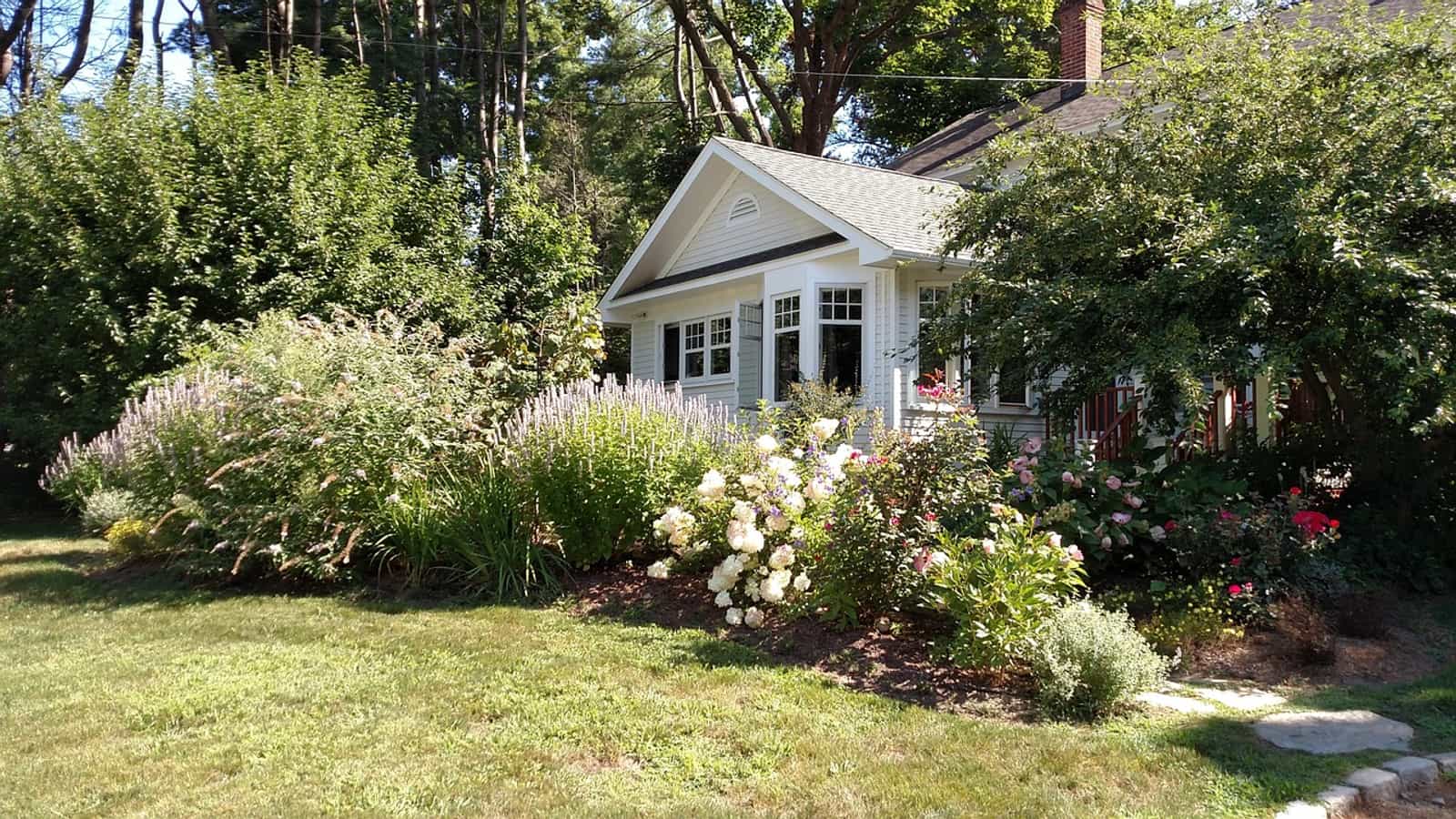
Olmos Park is a municipality entirely surrounded by San Antonio, with its own council, building department, police and fire service, and a city hall that answers the phone. This guide answers one question — what does the city publish about living here, and where is it? It covers the city's own account of how it began and how it is governed, the permit rules and the bond and inspection fees that come with them, drainage and street maintenance, the police and fire departments and the fire rating the city holds, the adopted 2026-2027 budget and its tax rate, the county record behind a deed, and what VIA publishes about transit. It does not compute a property's value or tax bill, does not look up a listing, does not rate the city or its schools, does not use population or income figures to describe anyone, and does not quote an insurance premium. The documents linked in each section are where the rest sits.
Where Olmos Park sits, and how it is governed
The city's own history page starts with the water: the area now known as Olmos Park sat within the basin of Olmos Creek, a tributary of the San Antonio River that traverses what is now north-central San Antonio, and in 1917, during the First World War, the U.S. military established Camp John Wise, a balloon-training school, within the area that would become Olmos Park (City of Olmos Park, History of Olmos Park, retrieved 24 September 2026).
The same page describes how the residential city took shape: the property was purchased in the 1920s by the oilman and real-estate developer H.C. Thorman, who acquired lands and began developing the neighborhood; in 1931 the subdivision known as Olmos Park Terrace was platted by the Northside Improvement Company, with Thorman as president; the 1929 stock-market crash slowed construction considerably; and Olmos Park officially incorporated as a city in the 1940s (same source). The page also states that the city is entirely surrounded by the city of San Antonio while keeping its own governance, and that the name Olmos comes from the Spanish word for elm tree (same source).
The governance itself is stated in one line on the city's government page: the City Council is the governing body and is composed of the Mayor and five Council Members, all of whom are residents of the city, and members of the City Council serve without compensation (City of Olmos Park, Government, retrieved 24 September 2026). The same page lists the rest of the structure a resident would look for: a municipal court as the judicial branch, a planning and zoning commission and a board of adjustment with their own historical agendas online, an economic development corporation, a higher education facilities corporation, a board of appeals, published election information and campaign finance reports, and an application to serve on a board or commission (same source).
Sources
- History of Olmos Park — Olmos Creek, Camp John Wise, the 1920s development, the 1940s incorporation — City of Olmos Park · retrieved 24 September 2026
- Government — the City Council of a mayor and five members, and the boards below it — City of Olmos Park · retrieved 24 September 2026
The permit record: what the city reviews before work starts
Olmos Park requires a permit before a building or structure is erected, constructed, enlarged, altered, repaired, moved, improved, removed, converted or demolished, and the city's permit page states how that works in practice. All applications go through My Government Online; meetings with the Building Department are by appointment only; building permits are issued on weekdays from 8:30 a.m. to noon and 1 p.m. to 4 p.m.; and after a plan is submitted, at least three working days should be allowed for plan checking (City of Olmos Park, Permits, retrieved 24 September 2026).
The page names what the model codes exempt but the city does not: all fences, new or replacement; swimming pools of any type, with above-ground pools prohibited by ordinance 8-160; and sidewalks, driveways, drive approaches or other impermeable surfaces located in the front yard as defined by 40-45. A survey or plat of the property is required before a permit issues for additions, garages, garage renovations, carports, swimming pools, fence construction or replacement, and any new construction; plans and blueprints are required for any addition exceeding 400 square feet, commercial alterations, a second-story addition, and renovations exceeding $75,000 in total construction cost, with contractor-drawn plans acceptable unless the total exceeds $100,000, at which point they must be sealed (same source).
The costs and the enforcement are published too: general contractors file a $5,000 surety bond on the city's form, with owner-builders exempt unless the property is rental or lease property, where the bond applies; two inspections are included in the permit cost, additional inspections are added at $50 each and re-inspections at $100; any work started before a permit is obtained is charged a double fee; permits run one year from issuance; and code or zoning relief is available only through the Board of Adjustment on hardship grounds (same source). Renovation or demolition of public and commercial buildings carries an asbestos survey requirement, and commercial renovations over $50,000 and new construction require accessibility review by the Texas Department of Licensing and Regulation or an equivalent provider (same source).
Source
- Permits — what needs a permit, plan requirements, bond, inspection fees and durations — City of Olmos Park, Building Department · retrieved 24 September 2026
Water, drainage and streets
The city's public works department states its own scope: planning, coordination and daily operation of street maintenance, solid waste and sanitation services, with responsibility for roadways, sidewalks, drainage systems and public sanitation programs, plus maintenance of streets and public green spaces (City of Olmos Park, Public Works Department, retrieved 24 September 2026).
Drainage has its own page and its own rules, because the city's storm drains carry runoff straight to streams and rivers without treatment. The page asks residents to put nothing but rainwater in a storm drain; notes that the city ordinance on picking up after a pet is Section 3.25 and that dog owners who disregard it may be fined; and tells residents who see illegal dumping to call the City Engineer's Storm Water Compliance Specialist or the Olmos Park Police Dispatcher, both numbers published on the page (City of Olmos Park, Storm Water, retrieved 24 September 2026). The same page states the penalty range for illegal dumping of hazardous waste — a minimum fine of $500 per day per violation — and carries the city's guidance for discharging chlorinated pool, hot tub and spa water, which is to test the water first, let it stand until the disinfectant dissipates, use a dechlorination tablet, or release the water over a well-vegetated area of the property (same source).
The city's storm water compliance is documented rather than asserted: the page publishes its MS4 storm water annual reports, including the most recent report for 2025 to 2026, alongside the construction-site review application and the TCEQ permit documents, and states that the household tips are based on information from the EPA and the Texas Commission on Environmental Quality (same source).
Sources
- Public Works Department — streets, sidewalks, drainage and sanitation responsibilities — City of Olmos Park · retrieved 24 September 2026
- Storm Water — drainage rules, pool-water discharge guidance, fines, published MS4 reports — City of Olmos Park · retrieved 24 September 2026
Police and fire: the city's own departments
Olmos Park has its own police department rather than contracting the service. The department states that it provides law enforcement services within the Olmos Park city limits, that patrol officers respond to all calls for service, investigate traffic crashes, enforce city, state and federal laws, respond to emergencies and conduct criminal investigations, and that it describes its approach as community-based and patrol-oriented (City of Olmos Park, Police Department, retrieved 24 September 2026). The page publishes the non-emergency and department numbers, a chief's contact, the how-to-file-a-complaint document, and the city's annual racial profiling reports (same source).
The fire department's page is specific about capacity, which is what an insurance context asks about: the city has one fire station housing two fire engines and one Quick Response Vehicle (Rescue 1); thirteen paid professional firefighters plus a reserve element; the department works with aiding departments to provide fire and EMS services 24 hours a day, seven days a week; and EMS transport is provided by contract through the City of Alamo Heights (City of Olmos Park, Fire Department, retrieved 24 September 2026).
The same page states that the department achieved a Class 1 Public Protection Classification from the Insurance Services Office — the highest class — in June 2023, and describes it as reflecting the department's capabilities (same source). A rating like that is a published designation, not a promise about anyone's premium, and this guide quotes it as the city publishes it. The department also lists free services to residents, including home safety visits and smoke alarms (same source).
Sources
- Police Department — jurisdiction, published reports and contacts — City of Olmos Park · retrieved 24 September 2026
- Fire Department — station, apparatus, staffing, EMS contract and ISO Class 1 classification — City of Olmos Park · retrieved 24 September 2026
The adopted budget and the tax rate, in the open
Olmos Park's adopted budget for fiscal year 2026-2027 covers 1 October 2026 through 30 September 2027, and its cover page carries the comparison a rate discussion needs: the property tax rate is $0.555624 per $100 of valuation for FY 2026-2027 against $0.511411 the year before; the no-new-revenue rate is $0.531886 against $0.500643; the voter approval tax rate is $0.555624 against $0.511411; the debt rate is $0.051492 against $0.047943; and the de minimis rate is $0.614316 against $0.569158 (City of Olmos Park, Adopted Budget FY 2026-2027, fiscal year 2026-2027, retrieved 24 September 2026).
The same cover page states that the budget will raise more revenue from property taxes than last year's budget by $275,218, which it gives as a 6.19 percent increase, that the property tax revenue to be raised from new property added to the tax roll this year is $46,768, and that the total debt obligation for the city secured by property taxes is $4,930,000 (same source). It notes that the cover page is presented to comply with Section 102.005 of the Texas Local Government Code (same source).
The city's finance page is where the rest of the money record lives, and it is deep: adopted budgets from fiscal year 2013 through fiscal year 2027, annual audit reports for fiscal years 2013 through 2025, and the debt service schedules for its Certificates of Obligation Series 2022, with the Series 2010 refunding schedule marked paid in full in February 2022 (City of Olmos Park, City Finance, retrieved 24 September 2026). The same page states that the City Manager is responsible for overseeing all financial and budgetary functions of the city, including budget preparation and administration, financial planning and fiscal oversight (same source).
None of this is applied to a particular address here. A taxable value is a property's own record, and the arithmetic that turns a rate and a value into a bill belongs to the owner's own tax statement — which is why the next section points at where the county keeps it.
Sources
- Adopted Budget FY 2026-2027 — property tax rate comparison, revenue statement, debt obligation — City of Olmos Park · fiscal year 2026-2027 · retrieved 24 September 2026
- City Finance — the City Manager's financial role, adopted budgets and audit reports by year — City of Olmos Park · retrieved 24 September 2026
The deed and the county record
The city rate is one line of a property's tax bill, not the bill. A Texas property sits inside several taxing units at once — a city, a county, a school district, sometimes a special district — and the state publishes the list that makes that visible: the Comptroller's Property Tax Assistance Division publishes the total tax rate reported for each taxing unit in Texas, as Tax Code Section 5.091 requires, while Tax Code Section 26.16 requires each county's assessor-collector to post rate information for every taxing unit in that county (Texas Comptroller of Public Accounts, Rates and Levies, retrieved 24 September 2026).
The paper behind the property itself sits with the county. The Bexar County Clerk's recordings division files, records and maintains real property records, personal property records, notices of trustee sales, military discharges and public notices, and the records are available through an Official Public Records Search; recording costs $25 for the first page and $4 for each additional page per document, certified copies cost $1 per page plus $5 for the certification, and the Clerk's office states plainly that it does not prepare deeds and does not guarantee clear title, directing that work to a title company or an attorney (Bexar County Clerk, Real Property/Land Records, retrieved 24 September 2026).
Two consequences follow, and they are the honest limits of this guide. First, an appraised value is assigned to a property, not to a neighborhood, and this guide quotes none. Second, a rate only becomes a bill when it meets a taxable value, which is why every rate figure above is presented with the document that publishes it rather than as applied to anyone's address.
Sources
- Rates and Levies — the state list of total tax rates by taxing unit — Texas Comptroller of Public Accounts, Property Tax Assistance Division · retrieved 24 September 2026
- Real Property/Land Records — recording, copies, liens, foreclosures — Bexar County Clerk · retrieved 24 September 2026
Getting around: what VIA publishes
VIA Metropolitan Transit serves the region and publishes its routes by number and corridor name rather than by city or neighborhood: Route 3 — San Pedro, Route 4 — San Pedro Frequent, Route 5 — McCollough and Route 9 — Broadway are entries from that list, each with its schedule published from the same page, alongside a separate service alerts page for detours (VIA Metropolitan Transit, Routes, retrieved 24 September 2026).
A route name does not by itself say which streets it serves or how close it comes to an address. VIA's trip planning page is where that question is answered, pointing riders to trip planning through Google Maps and the Transit app, with real-time next-bus information and free WiFi on buses (VIA Metropolitan Transit, Trip Planning, retrieved 24 September 2026).
Fares and transfer rules are published as well: transfers are purchased when boarding and are valid for 2.5 hours; reduced fares are available to children 5 to 13, seniors 62 and older, Medicare recipients, riders with certain disabilities, active-duty U.S. military and students; and seniors and riders with limited mobility can ride for 25 cents between 9 a.m. and 3 p.m. on weekdays and free all day on weekends with a VIA ID (VIA Metropolitan Transit, Fares, retrieved 24 September 2026). VIA also runs VIA Link, an on-demand van service in six named zones — Naco Pass, Randolph, Madla, Mainland, Downtown and Southeast — booked by app, online or by phone at the same $1.30 per trip as regular bus service, with free transfers (VIA Metropolitan Transit, VIA Link, retrieved 24 September 2026).
If what is really being weighed is whether this city fits a purchase, two pages on this site continue the thread: Weighing a location in San Antonio and Moving to San Antonio: what to expect. Listing data, as it stands today, is at Homes, where demo cards are labelled as demo and nothing there is presented as a real listing.
Sources
- Routes — VIA's published route list, by number and corridor name — VIA Metropolitan Transit · retrieved 24 September 2026
- Trip Planning — how VIA says to check service to an address — VIA Metropolitan Transit · retrieved 24 September 2026
- Fares — transfers, reduced-fare categories, off-peak rate — VIA Metropolitan Transit · retrieved 24 September 2026
- VIA Link — on-demand service zones, hours, fare — VIA Metropolitan Transit · retrieved 24 September 2026
Every figure on this page is attributed above to the page it came from and the day it was read. Nothing on this page is computed here and no rate, price or availability is looked up.