
Alamo Heights: what the city itself publishes
Published 15 October 2026
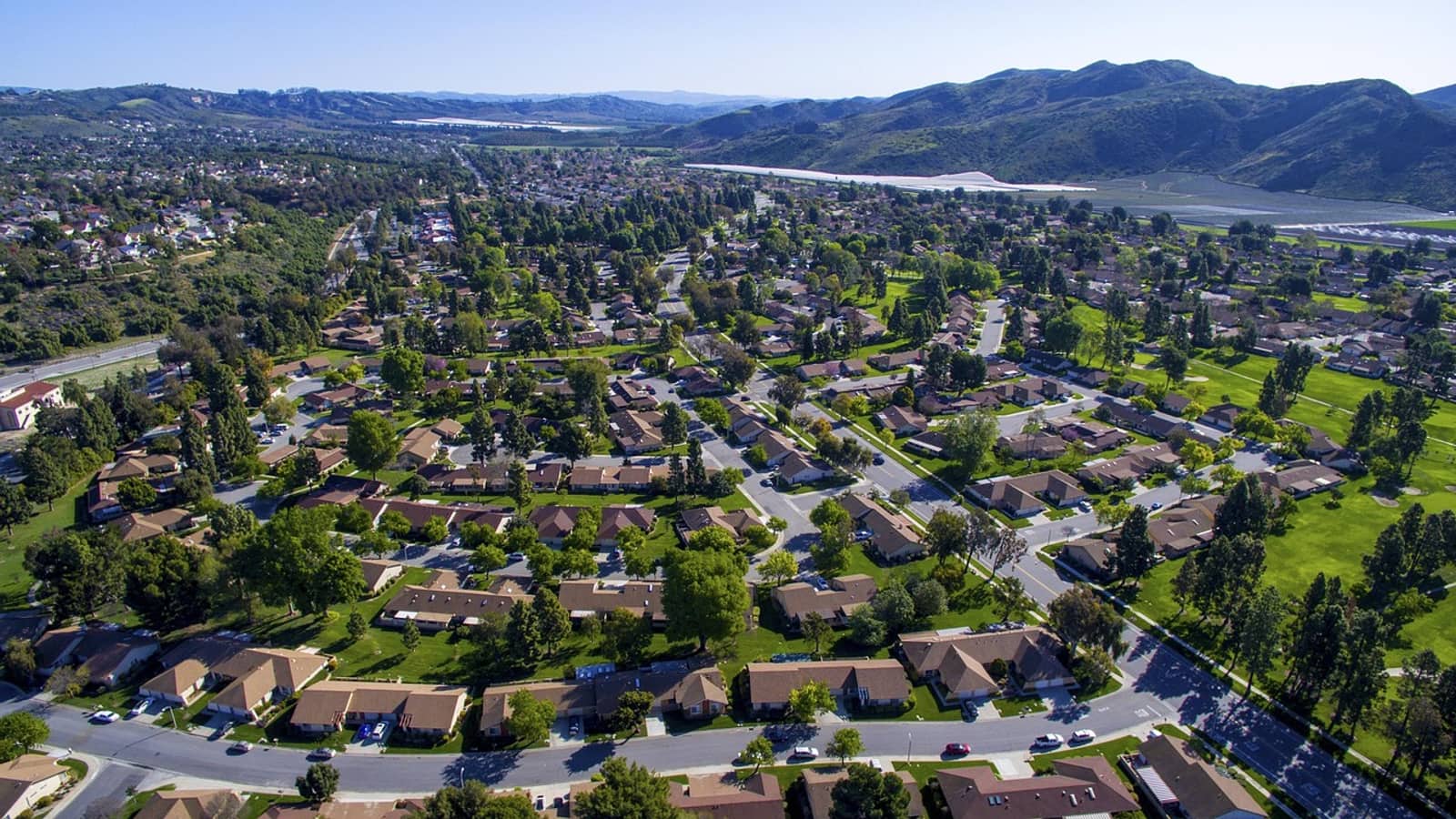
Alamo Heights is a city in its own right inside the San Antonio boundary: its own charter, its own council, its own building department. This guide answers one question — what do the city, the county and the transit authority publish about this place, and where is it? It covers where the city is and how it is governed, what needs a permit before work starts, where the appraisal and deed records live, the 2026 tax rates the county certified for the city, what the city publishes about solid waste and water, and what VIA publishes about getting around. It does not compute any property's value or tax bill, does not look up a listing, does not rate the city, its housing or its schools, and does not say who should live here. The records linked in each section are where those answers sit.
Where Alamo Heights sits, and how it is governed
The city publishes its own facts page, and it is unusually specific about the machinery of government. Alamo Heights follows a Council-Manager form of government as provided by its city charter; it is a home-rule municipality, operating under a charter adopted or amended as authorized by Article XI, Section 5 of the Texas Constitution; the original charter was adopted in 1954 and amended in May 2011; and all powers of the city are vested in the elective City Council, which enacts local legislation, adopts budgets, determines policies and appoints the highest-level city officials (City of Alamo Heights, Alamo Heights' Facts, retrieved 24 September 2026).
The same page states the geography in plain numbers: the center of the city is 4.5 miles north of downtown San Antonio, Alamo Heights is surrounded by San Antonio and adjacent to the cities of Terrell Hills and Olmos Park, and the city encompasses a total area of 2.1 square miles at 807 feet above sea level (same page).
The city's history page records how that boundary was drawn: residents voted 289 to 8 at a citizens' meeting on 4 June 1922 to petition the Bexar County judge for a city government, Alamo Heights became a municipality on 20 June 1922, Bluebonnet Hills was annexed in 1928, and Sylvan Hills completed the current northern boundary in 1944 (City of Alamo Heights, History, retrieved 24 September 2026). The same page notes that the Anderson mansion, later the Argyle Hotel, is the oldest surviving structure in the city (same page).
Sources
- Alamo Heights' Facts — city government, geography, mission and goals — City of Alamo Heights · retrieved 24 September 2026
- History — incorporation vote, annexations, first structures — City of Alamo Heights · retrieved 24 September 2026
The permit record: what the city reviews before work starts
The city publishes the list of work that needs a building permit. For single- and two-family dwellings it includes new construction, additions and alterations, structural modifications, all interior remodeling, window and door replacement, fences, arbors, trellises, retaining walls and wooden decks, foundation repair, driveways and other concrete work, garages and carports, patio enclosures, swimming pools, storage sheds, roofing — reshingling and redecking — and siding replacement; heating and A/C installation, replacement or repair; irrigation systems, which require a permit and a backflow prevention device with annual certification, plus an irrigation meter where a system covers more than 2,500 square feet of turf; and plumbing, sewer and gas work including water heaters, lawn sprinklers and hot tubs (City of Alamo Heights, Building & Construction Permits, retrieved 24 September 2026).
Two entries on that list are the ones people most often miss. All tree trimming requires a permit and pruning oak trees requires the wounds to be painted, while removal does not require a permit for a tree less than 8 inches in diameter at breast height — and heritage tree removal requires mitigation under the city's tree mitigation code (same page). And the city sets the hours work may happen: work preparation 7:00 to 8:00 a.m., actual work 8:00 a.m. to 5:00 p.m., cleanup and site vacation 5:00 to 6:00 p.m., Monday through Friday, with no work on weekends or city holidays (same page).
Applications, certificates of occupancy and inspections are processed through My Government Online, and the city publishes the permit fee schedule, the applications, and Chapter 5 of its adopted code of ordinances alongside the summary (same page).
Source
- Building & Construction Permits — required permits, work hours, tree rules — City of Alamo Heights · retrieved 24 September 2026
Where the appraisal and the deed live
The number attached to a house here is not written by the city. The city's tax page states that Alamo Heights has contracted with Bexar County to assess and collect city ad valorem taxes, that property owners now receive one consolidated tax bill from Bexar County, and that all future payments should be made to the Bexar County Tax Assessor-Collector (City of Alamo Heights, City Taxes, retrieved 24 September 2026).
The county also keeps the paper trail. The Bexar County Clerk's recordings division files, records and maintains real property records, personal property records, notices of trustee sales, military discharges and public notices, made available through an Official Public Records Search; recording costs $25 for the first page and $4 for each additional page per document, a certified copy costs $1 per page plus $5 for the certification, and the Clerk's office states it does not prepare deeds and does not guarantee clear title, pointing to a title company or an attorney for that (Bexar County Clerk, Real Property/Land Records, retrieved 24 September 2026).
One more piece of structure matters when a tax figure is quoted: a Texas property sits inside several taxing units at once — a city, a county, a school district, sometimes a special district — so no single rate describes the whole bill. The Comptroller's Property Tax Assistance Division publishes the total tax rate reported for each taxing unit in the state, as Tax Code Section 5.091 requires, and Tax Code Section 26.16 requires each county's assessor-collector to post rate information for every taxing unit in that county (Texas Comptroller of Public Accounts, Rates and Levies, retrieved 24 September 2026).
Sources
- City Taxes — collection by Bexar County, adopted rates and rate ordinances — City of Alamo Heights · retrieved 24 September 2026
- Real Property/Land Records — recording, copies, liens, foreclosures — Bexar County Clerk · retrieved 24 September 2026
- Rates and Levies — the state list of total tax rates by taxing unit — Texas Comptroller of Public Accounts, Property Tax Assistance Division · retrieved 24 September 2026
The city tax bill, in the open
The 2026 tax-rate notice the city publishes — a summary of the calculations certified on 27 July 2026 by the Office of the Bexar County Tax Assessor-Collector — carries the two reference rates the law uses to frame the decision. This year's no-new-revenue tax rate, the rate that would impose the same amount of taxes as last year on properties taxed in both years, is $0.380641 per $100 of property value; this year's voter-approval tax rate, in most cases the highest rate a taxing unit can adopt without holding an election, is $0.496515 per $100 (City of Alamo Heights, Notice About 2026 Tax Rates, tax year 2026, retrieved 24 September 2026). The same notice records the city's unencumbered maintenance-and-operations balance, the current-year debt service totals and the assumed collection rate, so the arithmetic behind the rates is readable rather than asserted (same source).
The city's tax page publishes its own account of the rate it adopted for FY 2026-2027: it states that the adopted rate will raise more taxes for maintenance and operations than last year's tax rate, that the tax rate will effectively be raised by 8.68 percent, and that it will raise maintenance-and-operations taxes on a $885,505 home by approximately $233.41. For FY 2025-2026 the same page states a 0.618 percent effective increase and approximately $20.18 on an $887,627 home (City of Alamo Heights, City Taxes, retrieved 24 September 2026).
The page links the adopted rate ordinance for each year back to 2013 and the 2026 property tax calculation worksheet (same page). So the honest reading is a sequence, not a headline: the appraisal district sets value, the council adopts a rate in a public meeting, the county certifies the reference rates, and the county collects. This guide stops at the published record and applies none of it to a particular address.
Sources
- Notice About 2026 Tax Rates — no-new-revenue and voter-approval rates, debt service, certified 27 July 2026 — City of Alamo Heights (calculations certified by the Bexar County Tax Assessor-Collector) · tax year 2026 · retrieved 24 September 2026
- City Taxes — collection by Bexar County, adopted rates and rate ordinances — City of Alamo Heights · retrieved 24 September 2026
- Rates and Levies — the state list of total tax rates by taxing unit — Texas Comptroller of Public Accounts, Property Tax Assistance Division · retrieved 24 September 2026
What the city itself publishes about running a house here
The city operates two solid waste programs, garbage and recycling, and publishes the rules for both. Cans and other waste materials go in the alley or at the curb by 7:00 a.m. on the morning of pickup and come back onto the property the same day; collection follows the address's side of Broadway — east side Monday and Thursday, west side Tuesday and Friday — and recycling is Wednesday. The published residential fee is $29.00 per month per household, and the commercial fee is $45.00 per month per business (City of Alamo Heights, Solid Waste, retrieved 24 September 2026).
The same page lists what will not be collected: furniture, water heaters, refrigerators, A/C units, stoves and mattresses; brush bundled longer than three feet or heavier than 40 pounds; and any demolition material or construction and remodeling debris, which the contractor who produced it must carry away. Hazardous materials, named individually, cannot be set out with regular waste at all (same page).
The residential services index is where the water side lives: water and sewer billing and rates, a published drinking water quality report, the water conservation plan and programs, the storm water management plan and MS4 permit, and a yard piping project covering the Sylvan Hills and Bluebonnet neighborhoods (City of Alamo Heights, Residential, retrieved 24 September 2026). Service questions route through the city's own contact page and the online service request tools the index links (same page).
Sources
- Solid Waste — collection days, fees, excluded items — City of Alamo Heights · retrieved 24 September 2026
- Residential services index — utility billing, drinking water quality report, conservation, MS4 permit — City of Alamo Heights · retrieved 24 September 2026
Getting around: what VIA publishes
VIA Metropolitan Transit publishes its route list indexed by route number and corridor name rather than by neighborhood. Route 2 — Blanco, Route 9 — Broadway, Route 88 — Bandera Frequent and Route 501 — UTSA/Leon Valley are entries from that list; each route's schedule is published from the same page, and VIA publishes a separate service alerts page for disruptions and detours (VIA Metropolitan Transit, Routes, retrieved 24 September 2026).
A route name is not a coverage promise. Which route reaches a specific address is a question the route list does not answer on its own, and VIA's trip planning page is where that question is answered: it points riders to the trip-planning feature in Google Maps and to the Transit app, and VIA publishes real-time next-bus information and free WiFi on buses (VIA Metropolitan Transit, Trip Planning, retrieved 24 September 2026).
Fares are published too. Transfers must be purchased when boarding and are valid for 2.5 hours, with additional fare required when transferring from regular to Express service; reduced fares are available to children 5 to 13, seniors 62 and older, Medicare recipients, riders with certain disabilities, active-duty U.S. military and students; and seniors and riders with limited mobility can ride for 25 cents between 9 a.m. and 3 p.m. on weekdays and free all day on weekends with a VIA ID (VIA Metropolitan Transit, Fares, retrieved 24 September 2026).
VIA also runs VIA Link, an on-demand van service that operates in six named zones — Naco Pass, Randolph, Madla, Mainland, Downtown and Southeast — in place of fixed routes, booked through an app, online or by phone, at the same $1.30 per trip as regular bus service with free transfers (VIA Metropolitan Transit, VIA Link, retrieved 24 September 2026). The zone list is the honest answer about coverage: if a trip starts or ends outside a named zone, the published instruction is to ride to a transfer point and connect.
Two doors out of this guide, both on this site: Weighing a location in San Antonio is where a place is put next to the rest of a purchase decision, and Homes is where listing data stands today — its demo cards are labelled as demo, and no card there is a real listing.
Sources
- Routes — VIA's published route list, by number and corridor name — VIA Metropolitan Transit · retrieved 24 September 2026
- Trip Planning — how VIA says to check service to an address — VIA Metropolitan Transit · retrieved 24 September 2026
- Fares — transfers, reduced-fare categories, off-peak rate — VIA Metropolitan Transit · retrieved 24 September 2026
- VIA Link — on-demand service zones, hours, fare — VIA Metropolitan Transit · retrieved 24 September 2026
Every figure on this page is attributed above to the page it came from and the day it was read. Nothing on this page is computed here and no rate, price or availability is looked up.