
5 San Antonio communities to consider
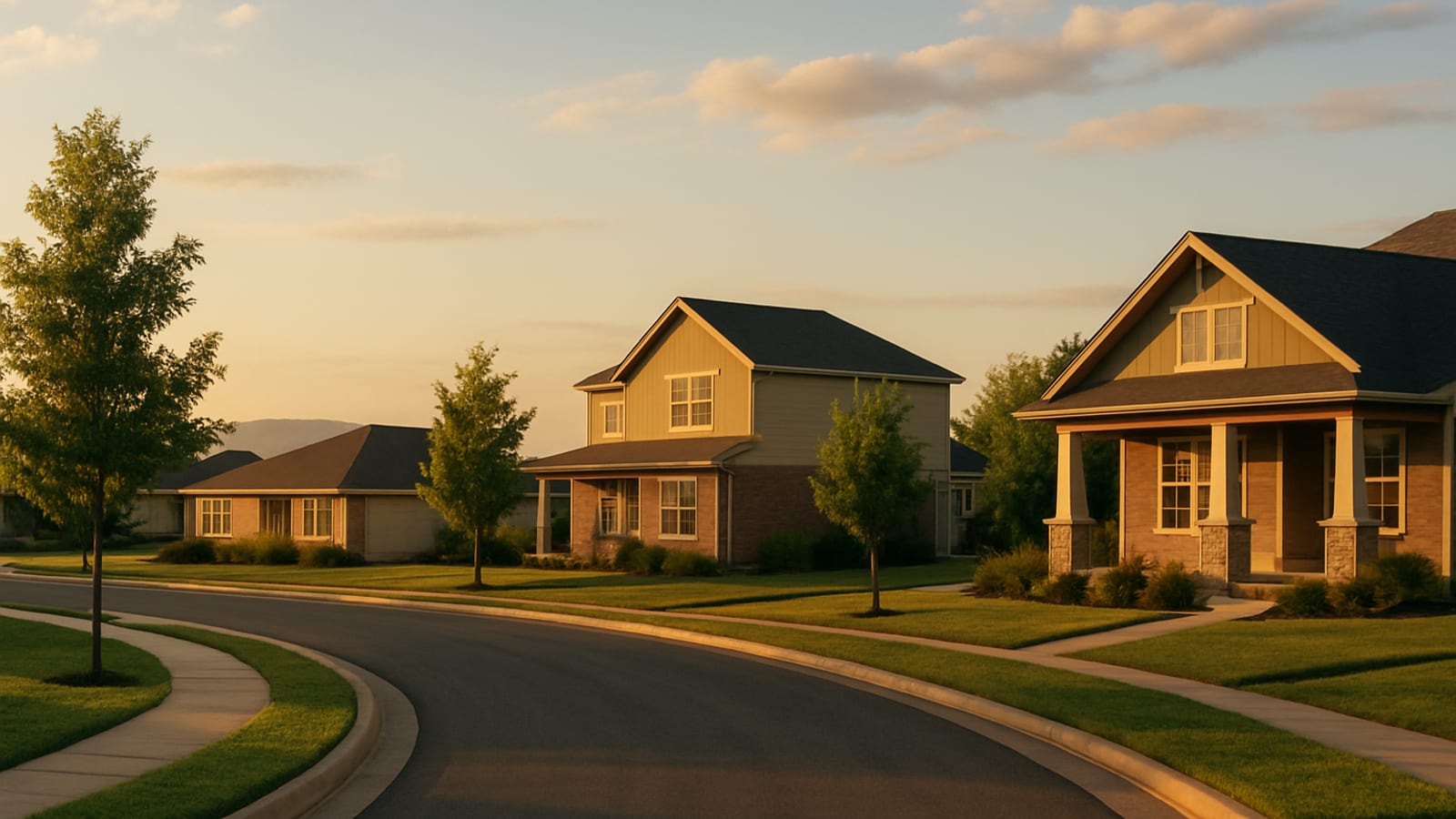
This is guidance, not a ranking, and the five places below are not the five best places in the San Antonio area. There is no such list, and we would be inventing one if we published it. What follows is five examples we could document from what a city or a community association publishes about itself, with the selection criteria printed first so you can disagree with them and go looking somewhere else.
How these five were chosen
- The place documents itself. Every entry below rests on material published by that city, that city's own officials, or that community's property owners association — not on a third-party description of it.
- It has a documented relationship to a JBSA location, or a documented location relative to San Antonio. Where the relationship is asserted, it is the city's own words; where it is a distance, it is the city's own published figure.
- They sit in different parts of the metro. Two are northeast of the city, one is north-central San Antonio, one is a Hill Country city on Interstate 10, and one is on the Interstate 35 corridor. That spread is the point; a reader stationed at a particular campus should find at least one of these in the direction their own trip runs, and should feel free to ignore the rest.
What the criteria deliberately are not: price band, school rating, growth rate, or "vibe". We hold no dated source for any of those, and the house rule is that a figure without one does not get published.
Universal City
What the record says. Universal City is the incorporated city that sits with JBSA-Randolph. Its mayor's welcome page says the city is "truly proud to be known as the Gateway to Joint Base San Antonio Randolph Air Force Base", notes that the city "has come a long way since it was initially named Randolph Field back in 1930", and observes that many retired veterans who served at Randolph chose to stay and call the community home (City of Universal City, "Mayor's Welcome", retrieved 24 September 2026). The city's own home page describes it as home to thousands of active duty and retired military members, and lists the Randolph AFB/Joint Base San Antonio relationship among its community information (City of Universal City, retrieved 24 September 2026).
Why it is on this list. It is the one entry here whose relationship to a JBSA location is stated by the city itself in terms of the base, not of the region. For a household posted to Randolph, the address question and the community question are the same question.
Check yourself. Because the base is the neighbor, the two records to settle first are the school assignment for any address (Texas Education Agency, "Finding a School", retrieved 24 September 2026) and the Military Housing Office's view of the lease you are considering (210-483-9900 is the Randolph office's published number — see the JBSA article).
Live Oak
What the record says. Live Oak is an incorporated city on the eastern side of the Randolph corridor, and its own site documents its relationship with the installation in the smallest possible way: a published "JBSA-Randolph Drone Safety" notice sits among its community items, and the city describes itself as "The Premier Community to Live, Learn, Work, & Play!" (City of Live Oak, retrieved 24 September 2026).
Why it is on this list. It is an example of the pattern a PCS household will meet again and again in this metro: small incorporated cities that publish their own budgets, permits, public-safety notices and meeting agendas, and whose homeowners deal with a city hall rather than with San Antonio's. Whether that is what you want is a preference. That it is the arrangement is a fact you can check on the city's own site in ten minutes.
Check yourself. Ask the same two questions as above — the TEA assignment, and the housing office's read on the lease — plus one of your own about services, because a smaller city's services are published and easy to compare.
Stone Oak
What the record says. Stone Oak is a master-planned community in San Antonio whose property owners association describes it in exactly those terms: "This Master-Planned community is one of the most beautiful areas in San Antonio", and it states that the association is responsible for "upholding and ensuring the restrictions set forth in the Stone Oak POA Master Plan" (Stone Oak Property Owners Association, retrieved 24 September 2026).
Why it is on this list. Master-planned is a documented arrangement rather than a marketing word, and it changes what a household is buying: a recorded master plan, association restrictions and a dues obligation. Anyone considering a home inside one should read the plan and the restrictions before the offer, not after — and should ask the association, not a listing agent, what the current dues are and what they cover.
Check yourself. The restrictions and the master plan, from the association; the tax stack for the specific address, from the Comptroller's rate and levy publication; the flood zone, from FEMA's map service; and the school assignment, from TEA. When the Homes surface carries real listings, it will be the place to see what is actually for sale here rather than what is planned; until then, the calculators are where the money questions go.
Boerne
What the record says. The City of Boerne's own community page records that in 1840 a Bexar County surveyor named John James ventured north of San Antonio into the Texas Hill Country and founded what became the city of Boerne; that the city was incorporated in 1909; that it continues to celebrate the German cultural traditions of its earliest residents; and that it sits "along Interstate 10 about 25 miles northwest of San Antonio", with a historic downtown of antique and eclectic shops (City of Boerne, "About the Community", retrieved 24 September 2026). That distance figure is the city's own published number, and it is the only mileage anywhere in this article.
Why it is on this list. It is the northwest corridor in one entry, and it is the clearest case of a household choosing a different county, a different school district and a different commute in exchange for a smaller city. Camp Bullis, the field training site, is also on the northwest side of the metro, so a rotational household at the field site has a reason to read this corridor rather than assume it is too far.
Check yourself. The city's own site publishes its budget, permits and development notices. Then TEA for the district and campus serving the address, FEMA for the zone, and the Comptroller's rates for the taxing units on that specific bill — a different county means a different stack.
New Braunfels
What the record says. New Braunfels is the Interstate 35 city at the northeast end of the San Antonio metro. Its own site publishes the Comal County fair day as a city holiday — city facilities close for it on 25 September 2026 — and lists city council meetings at 550 Landa St, and it documents the city working alongside Comal County and Guadalupe County on joint matters (City of New Braunfels, retrieved 24 September 2026).
Why it is on this list. It is the example of a household living in one metro's orbit and another county's jurisdiction: the city's own material names both counties it deals with, the county fair is a city holiday, and the council is the reader's own. It is also the counter-example to "San Antonio" as a single address — for a household stationed at Randolph or at the northeast side of Fort Sam Houston, this is a plausible corridor rather than a far-flung one, and the only honest way to test that is to drive it at the hour you would actually drive it.
Check yourself. TEA for the district and campus, FEMA for the zone, the Comptroller for the taxing units, and the city's own site for the budget and services you would be paying for.
What this article refuses to claim
- No prices, rents, price ranges or "affordability" verdicts for any of the five. We hold no dated source for a price, and the personal math belongs in the calculator — Mortgage & Affordability Calculator — and in the rent-or-own comparison, Rent or Buy.
- No rating or ranking of these or any other places, no school score, no "up and coming", no "best value".
- No commute times. The one distance in the article is Boerne's own published figure about itself; every other corridor question is answered by the reader's own trip, in their own minutes.
- No demographic claims about who lives anywhere.
- No claim that five is a survey. It is five examples with stated criteria, chosen because each could be documented — and a reader whose duty location is on the west or southwest side will correctly notice that the examples lean northeast. That omission is ours, not a statement about those areas: we could not document an example there from a source that met criterion one in this pass, so we published none.
Where to go next
- The campus-by-campus orientation, the housing offices and the records: Where to live in San Antonio if you're stationed at JBSA.
- The climate, the cost index and the PCS mechanics: Moving to San Antonio: what to expect.
- Write your own brief and score a place you are already considering, on your answers only: Find My Ideal Location. Nothing about it rates anywhere.
- The money, on your own figures: How much home can you afford in San Antonio?, What is a debt-to-income ratio, and why do lenders use it?, and the Mortgage & Affordability Calculator.
Tool
Find My Ideal Location
What this is. A way to write down what you need from where you live — how far you're willing to travel, how much noise and traffic you'll accept, what you want within reach — and then score a place you're already considering against your own answers.
What it is not. We do not rate neighbourhoods, schools or areas. We do not look up distances, we do not run a map, and we have not visited anywhere. Flood maps, tax rates and insurance filings belong to the agencies that keep them — we point you to those records rather than summarising them for you.
Your brief
You haven't told us anything to score yet
Write down one thing you need from where you live — a travel time, a priority within reach, the kind of area you want — and the questions about it appear, with the trade-offs between your own answers. Nothing is scored until you answer a question, and an answer you leave out is never counted against you.
Once you've written down at least one preference, you can save it, email it, or ask an expert about it.