
Air conditioning in San Antonio: when to service it and what a visit covers
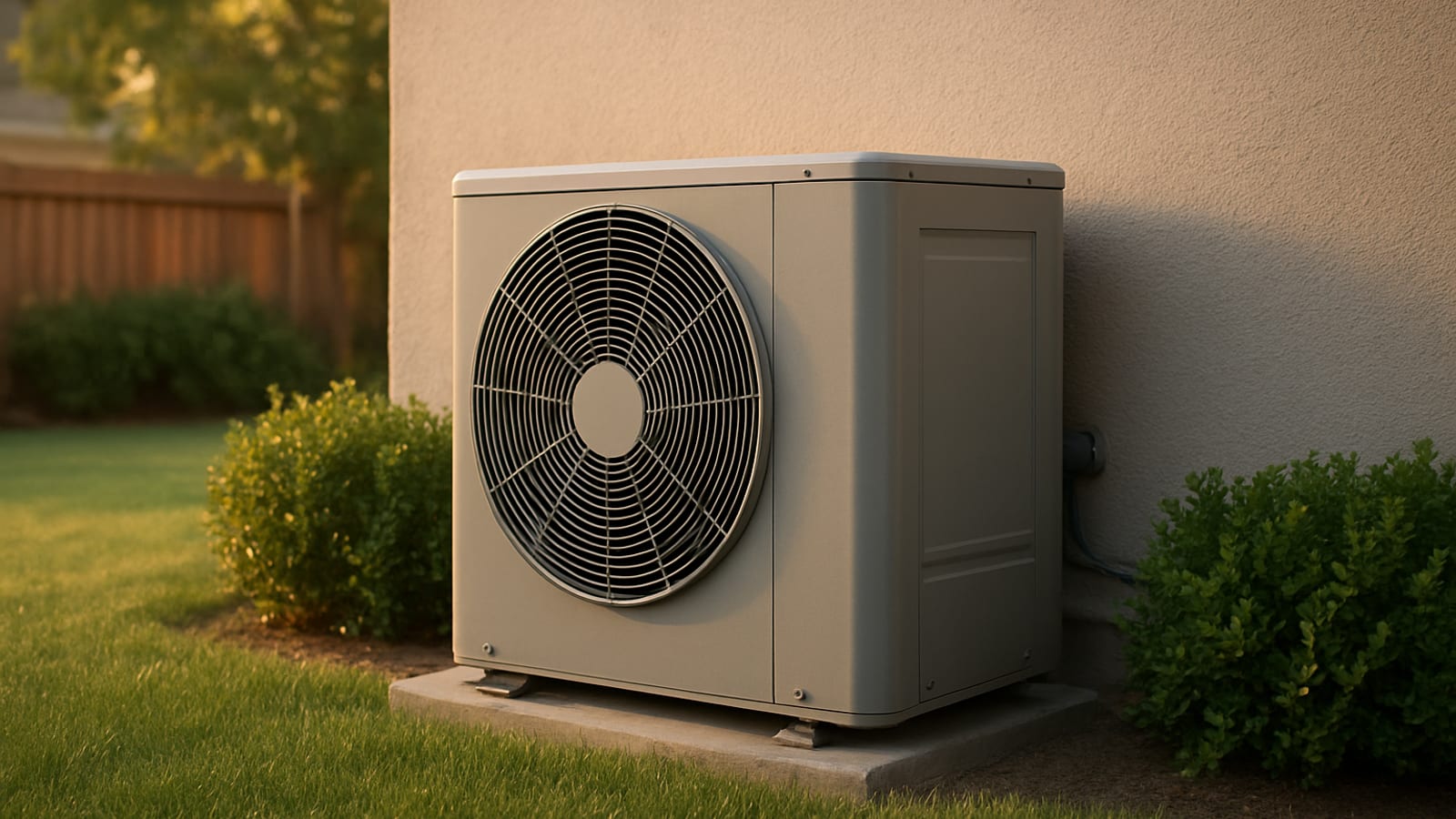
The honest answer to "how often should I service the air conditioner" is a schedule rather than a number of visits, and the schedule starts with the season this city actually has. The federal efficiency programme's guidance is the same everywhere: check the filter monthly, book a professional check-up once a year, and do the cooling check in the spring, before the equipment is working hardest.
San Antonio makes the cooling half of that schedule the long half. In the National Oceanic and Atmospheric Administration's 1991-2020 climate normals for San Antonio International Airport, the normal daily maximum temperature is 92.4 degrees in June, 94.9 in July, 96.0 in August and 90.1 in September, and the normal cooling-degree-day totals run 526.4, 613.8, 633.8 and 446.5 for those same months, with May at 359.3 and October at 229.3 (NOAA National Centers for Environmental Information, U.S. Climate Normals 1991-2020, station USW00012921, retrieved 24 September 2026). That is a cooling load that starts in April and does not finish until October — which is why a spring check-up is worth more here than a mid-August emergency call.
The one thing you do yourself, every month
This is the item with the best return and the least skill required. ENERGY STAR's advice is specific: check your filter every month, especially during heavy-use months, and change it if it looks dirty after a month — at a minimum every three months. A dirty filter slows air flow and makes the system work harder, and a clean one keeps dust from building up in the system (ENERGY STAR, "Heat & Cool Efficiently", retrieved 24 September 2026).
The same page's checklist adds that the filter belongs to a bigger picture — sealed and insulated ducts, because ducts running through an attic or crawlspace are often the biggest energy wasters in the system.
What a professional visit actually covers
A maintenance visit is not a tune-up in the way a car service is. ENERGY STAR's checklist describes what a typical check-up includes, and it divides into the whole system and the cooling side:
- Whole system: check thermostat settings so the system is comfortable when you are home and efficient when you are away; tighten electrical connections and measure voltage and current at the motors; lubricate moving parts; check and inspect the condensate drain, because a plugged drain can cause water damage in the house and affect indoor humidity; and verify the starting cycle so the equipment starts, runs and shuts off properly.
- Cooling specific: clean the evaporator and condenser coils, since dirty coils reduce cooling and make the system run longer; check the refrigerant level and adjust it, because too much or too little makes the system less efficient; and clean and adjust the blower components, because airflow problems can reduce system efficiency by up to 15 percent.
If the same visit covers the heating side, the checklist's heating list is the fire-safety one: gas or oil connections, gas pressure, burner combustion and heat exchanger, because improperly operating connections are a fire hazard and a dirty burner or cracked heat exchanger causes improper operation (ENERGY STAR, "Maintenance Checklist", retrieved 24 September 2026).
None of that is priced here: what a visit costs is a quote from a licensed contractor.
Book it before the season, not during it
The timing advice is the part of that checklist worth acting on today: have a contractor do annual pre-season check-ups, and since contractors get busy once summer and winter come, check the cooling system in the spring and the heating system in the fall — ENERGY STAR suggests planning the check-ups around the spring and fall time changes, which is as good a memory hook as any (ENERGY STAR, "Maintenance Checklist").
ENERGY STAR's own guidance gives the other trigger for a professional's opinion: if your equipment is more than 10 years old, or is not keeping the house comfortable, have it evaluated by a professional contractor. And it carries a warning that applies to any replacement: improper installation can reduce system efficiency by up to 30 percent, so the installing contractor matters as much as the equipment (ENERGY STAR, "Heat & Cool Efficiently", retrieved 24 September 2026).
Who is allowed to do the work in Texas
Ask for the licence number, because Texas requires one. The Texas Department of Licensing and Regulation states that contractors who install, repair or maintain systems related to air conditioning, refrigeration or heating must have a TDLR licence, and that air conditioning and refrigeration companies must employ an ACR contractor in each permanent location. TDLR publishes a licence search where a name, licence number or company can be checked before anyone touches the equipment (Texas Department of Licensing and Regulation, "Air Conditioning and Refrigeration Contractors Homepage", retrieved 24 September 2026).
A licence is not a rating and this page will not offer one. It is the minimum a company has to hold, and it takes about a minute to verify.
A spring check-up, a filter every month and a licence number checked before the work starts is the whole routine. If a maintenance figure belongs in the monthly budget, the Mortgage and Affordability Calculator computes from what you enter, and it fetches nothing. What a bigger repair year does to that budget is the same arithmetic: How much home can I afford in San Antonio?.
Tool
Mortgage & Affordability Calculator
Estimated affordable purchase price
$276,984
based on a monthly housing budget of $2,300 after your other debts
- Principal & interest
- $1,575.65
- Property tax
- $415.48
- Insurance
- $160.00
- Mortgage insurance
- $103.87
- HOA
- $45.00
- Total monthly housing cost
- $2,300.00
- Loan amount
- $249,286
- Down payment (10.0%)
- $27,698
- Total interest over 30 yrs
- $317,954
- Total of payments
- $567,239
- Mortgage insurance is included because the down payment is under 20% of the price. Set its rate to 0 to see the estimate without it.
Estimate only. Excludes closing costs, moving costs, repairs, utilities and any change in taxes or insurance over time. Computed by mortgage-v2 from the assumptions above — no AI produced these numbers and no lender has reviewed them.
Do something with this result